

Updated October 2026. Rates, prices and tax rules change. This article is for education only and is not personalized financial advice.Bad Credit Options
In short: A good car loan starts before you ever set foot in a dealership. Check your credit first, get preapproved by a bank or credit union, and negotiate the price of the car separately from the car loan. Choose the shortest term whose payment you can comfortably afford, put down as much as you reasonably can, and read every add-on in the contract before you sign.
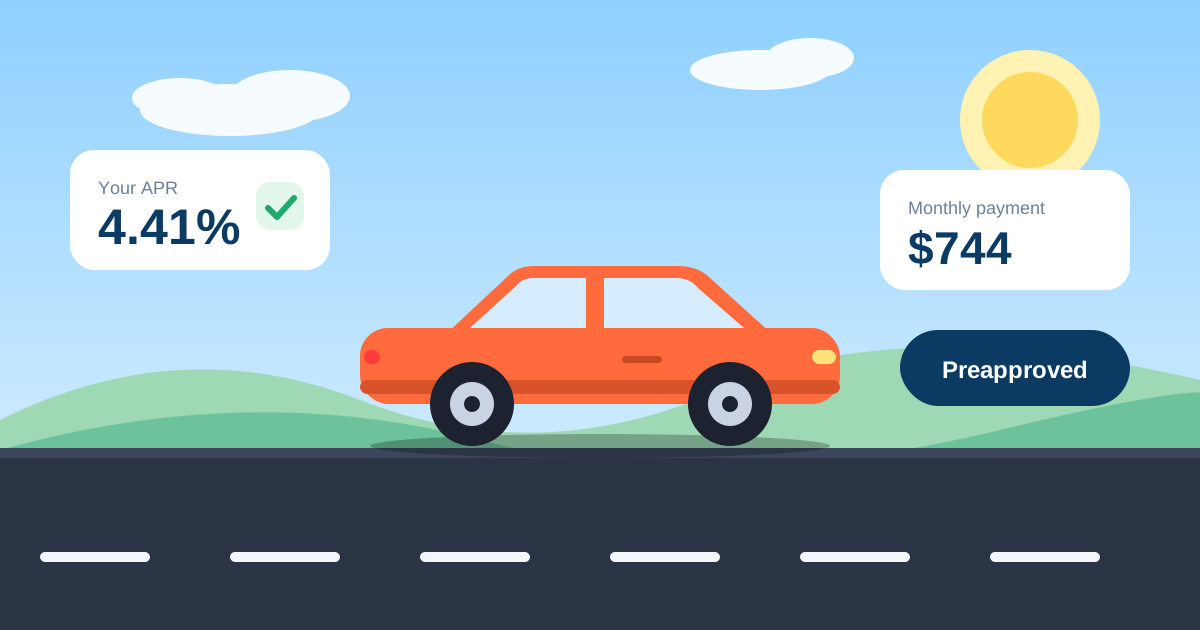
Your credit score decides most of your rate: in Experian’s Q2 2026 data, the average new-car rate was 4.41% for the top credit tier and 16.11% for the lowest. On a $40,000 loan over 60 months, that gap is about $231 a month. That is the core of how to finance a car without overpaying.

Car financing is one of the most searched money topics in the country right now, and it’s easy to see why. The average new vehicle sold for $50,562 in September 2026, according to Kelley Blue Book data from Cox Automotive.[3]
Most buyers finance at least part of that, so the car loan, not the sticker price, becomes the real purchase. The difference between a good loan and a bad one can easily be $5,000 to $15,000 over its life, and it often gets decided in a small finance office in about twenty minutes.
This guide is built to be read in order, but you can jump to what you need. It covers how car loans work, what rates look like for each credit level, how much car you can afford, how to shop for a loan, whether to lease instead, what to do with bad credit or negative equity, how the new federal car loan interest deduction works, when to refinance, and what to do if payments become hard. Every number comes with a source, and where I couldn’t verify something, I say so.
Table of Contents
- The short version: 10 steps to a good car loan
- How car financing actually works
- The car financing market right now (2026 numbers)
- Car loan rates by credit score
- Improve your credit before you apply
- How much car can you really afford?
- How to shop for a car loan, step by step
- Loan term: why longer isn’t cheaper
- Down payment and GAP insurance
- Negative equity: owing more than the car is worth
- Lease vs. finance: which is right for you?
- 0% APR deals vs. cash rebates
- Financing a car with bad credit
- The dealer finance office: add-ons, markups and tactics
- The federal car loan interest deduction
- Refinancing a car loan
- Paying off a car loan early
- If you can’t make your payments
- Three examples: what good and bad deals look like
- Mistakes that cost the most
- Pre-signing checklist
- Frequently asked questions
- Sources
The Short Version: 10 Steps to a Good Car Loan
- Check your credit reports and score. Look for errors you can dispute, and know which rate tier you’re in.
- Set a total budget, not just a monthly payment. Include insurance, fuel, maintenance and registration.
- Save a down payment. Aim for 10% to 20% on a new car, and enough on a used car to avoid owing more than it’s worth.
- Get preapproved with two or three lenders. Include at least one credit union and one bank or online lender.
- Keep your applications in a short window. Rate shopping within a couple of weeks is usually treated as one inquiry by most scoring models.
- Negotiate the price of the car first. Then talk about financing, and ask the dealer if they can beat your preapproval.
- Choose the shortest term you can comfortably afford. Be careful with anything over 72 months.
- Question every add-on. Extended warranties, service plans and GAP coverage are optional and negotiable.
- Read the contract. Check the APR, term, amount financed, total of payments and any prepayment penalty.
- Plan for the car loan after you sign. Set up autopay, pay extra toward principal if you can, and revisit refinancing if your credit improves.
How Car Financing Actually Works
The basic parts of a car loan
Every car loan is built from the same few pieces, and once you understand them, a lot of the dealership confusion goes away.
- Principal (amount financed): the amount you borrow. It’s the price of the car, plus taxes and fees, plus anything you roll in (like add-ons or negative equity), minus your down payment and trade-in value.
- APR (annual percentage rate): the yearly cost of borrowing, expressed as a percentage. It reflects the interest rate plus certain lender fees, which is why APR is the number to compare across offers.
- Term: how many months you’ll take to repay, commonly 36, 48, 60, 72 or even 84 months.
- Monthly payment: determined by the principal, APR and term.
- Down payment: cash you pay up front. It reduces the amount you borrow.
- Lien: the lender’s legal claim on the car until the loan is paid off.
Interest in plain English
Most car loans are simple-interest loans, which means interest is calculated on the balance you still owe. Early in the car loan, a larger part of each payment goes to interest. Later, more goes to principal. That’s why paying extra toward principal early saves more than paying extra near the end, and why stretching a loan for a long time costs so much: you spend more months paying interest on a larger balance.
Direct lending vs. dealer financing
There are two main ways to get a car loan:
- Direct lending. You borrow directly from a bank, credit union or online lender, then use the car loan to pay the dealer. You know your rate before you go shopping.
- Dealer financing. The dealership collects your application and sends it to one or more lenders, then presents you with an offer. The dealer may arrange the loan through a bank, or through a manufacturer’s own finance company (often called a captive lender), such as Hyundai Motor Finance, Toyota Financial Services or Ford Credit.
Neither is automatically better. Manufacturer finance arms sometimes offer promotional rates that banks can’t match, particularly on new cars. Credit unions often offer lower rates on average. Experian’s data on refinancing shows the pattern: credit unions accounted for 63.43% of auto refinances in Q1 2026, with an average payment saving of $101, versus $60 for banks.[1]
The key is to know your options before the dealer shows you theirs. The CFPB notes that lenders and dealers aren’t required to offer you the best rate, which is why finding out what rates are available first gives you real bargaining power.[6]
What is a lienholder, and where do you find the lienholder address?
The lienholder is the lender that has a legal claim on your car until the car loan is paid off. Their name goes on the title or the electronic title record. Searches like “Hyundai Motor Finance lienholder address” are common because you may need it when you sell or trade in the car, pay off the loan, or move the title.
The right address depends on your lender and your state, and it can change, so don’t rely on a random website. Check your car loan documents or your lender’s online account, or call the number on your statement and ask for the payoff and title-release instructions in writing. If you’re paying off the loan as part of a sale, the buyer’s lender or dealership will need the exact payoff address, and getting it from your lender directly avoids misdirected payments.
How the process runs from start to finish
- You check your credit and set a budget.
- You apply for preapproval, and each lender runs a credit check.
- You pick a car and negotiate the price.
- You choose a car loan (preapproval or dealer offer) and sign the contract.
- The lender pays the dealer, and the lien is recorded on the title.
- You make monthly payments until the balance reaches zero, then the lender releases the lien and you receive a clear title (the process varies by state).
Lenders will also require you to carry insurance on the car while you owe money on it, usually including collision and comprehensive coverage. Budget for that, because it can be more expensive than minimum liability insurance.
The Car Financing Market Right Now (2026 Numbers)
Before you decide what’s a good deal, it helps to know what’s normal. Here is where the US market stands, based on the most recent reports I could verify.
| Measure | Latest figure | Source and period |
|---|---|---|
| Average new vehicle transaction price | $50,562 (up 0.7% from a year earlier) | Kelley Blue Book / Cox Automotive, Sept. 2026[3] |
| Average new-car loan amount | $43,925 | Experian, Q1 2026[1] |
| Average used-car loan amount | $27,070 | Experian, Q1 2026[1] |
| Average new-car monthly payment | $770 | Experian, Q1 2026[1] |
| Average used-car monthly payment | $531 | Experian, Q1 2026[1] |
| Average new-car loan term | 69.48 months | Experian, Q1 2026[1] |
| New loans longer than six years | 35.55% | Experian, Q1 2026[1] |
| Subprime share of all auto loans | 15.75% | Experian, Q1 2026[1] |
| Average incentive on a new vehicle | $3,359 (6.6% of price) | Kelley Blue Book / Cox Automotive, Sept. 2026[3] |
What these numbers tell you
Payments are high, and terms are getting longer. The average new-car payment was $770 in Q1 2026, up from $748 a year earlier. Meanwhile the share of new loans longer than six years rose from 30.83% to 35.55%.[1] Buyers are stretching terms to keep monthly payments manageable, which keeps the payment looking affordable while the total cost grows.
Prices are near their record. September’s average of $50,562 was just $52 below the all-time high set in December 2025. Cox Automotive’s analyst noted that affordability pressure is pushing buyers toward lower-priced vehicles and segments, which is why the average rose only slightly even though individual vehicle prices keep climbing.[3]
More borrowers are in the riskier tiers. Subprime borrowers made up 15.75% of auto loans in Q1 2026, up from 14.40%, and 20.60% of used-vehicle loans.[1] At the same time, Experian reported that 30-day delinquencies were 2.00% and 60-day delinquencies were 0.86% in the same quarter.[1]
The takeaway: if your payment is lower than $770 on a new car, or lower than $531 on a used car, you’re below average. That doesn’t mean it’s the right payment for your budget, but it helps to keep the averages in perspective when a dealer says a payment is “normal.”
Car Loan Rates by Credit Score
Your credit score is the single biggest factor in your rate. Experian’s Q2 2026 averages, using VantageScore 4.0 tiers, look like this:[2]
| Tier | Score range | Avg. new-car APR | Avg. used-car APR |
|---|---|---|---|
| Super prime | 781 and above | 4.41% | 6.29% |
| Prime | 661 to 780 | 6.15% | 8.81% |
| Near prime | 601 to 660 | 9.71% | 13.93% |
| Subprime | 501 to 600 | 13.52% | 19.10% |
| Deep subprime | 300 to 500 | 16.11% | 21.62% |
These are averages, not offers. Your actual rate also depends on the lender, the loan term, the car’s age, your down payment, your income and your existing debts. Different scoring models (FICO and VantageScore) use different ranges, so your score from one app may not map exactly to these tiers.
What the rate difference costs in real dollars
Here’s the same $40,000 new-car loan over 60 months at each tier’s average rate. These payments are my own calculations using the standard loan formula, based on Experian’s average rates:
| Tier | APR | Monthly payment | Total interest |
|---|---|---|---|
| Super prime | 4.41% | $744 | $4,645 |
| Prime | 6.15% | $776 | $6,566 |
| Near prime | 9.71% | $844 | $10,651 |
| Subprime | 13.52% | $921 | $15,248 |
| Deep subprime | 16.11% | $975 | $18,504 |
The gap between the top and bottom tier is $231 a month and $13,859 in interest on the same car. That’s why improving your score, even by one tier, can be worth more than any negotiation on the sticker price.
Used cars cost more to finance per dollar borrowed. On a $25,000 used car over 60 months, the prime tier at 8.81% means about $517 a month and $5,999 in interest. At the subprime average of 19.10%, it’s about $650 a month and $13,993 in interest, which is more than half the car’s price again.
Why used-car loans have higher rates
Lenders charge more on used cars because the collateral is older and harder to value, and because used-car borrowers are, on average, more likely to be in lower credit tiers. A newer used car (one to three years old) often qualifies for better rates than an older one. If you’re choosing between two used cars, ask lenders whether the car’s age or mileage changes the rate or maximum term.
Improve Your Credit Before You Apply
If you aren’t in a hurry, spending one to three months improving your credit can pay for itself many times over. Experian’s advice for borrowers lines up with common-sense steps:[2]
- Check your credit reports for errors. You can get free reports at AnnualCreditReport.com, and you can dispute inaccurate information with the credit bureaus.
- Pay down credit card balances. High card balances relative to your limits can drag your score down. Paying them down is one of the quicker ways to move it.
- Catch up on past-due accounts. A current account is better than a delinquent one.
- Don’t open new credit right before you apply. New accounts and inquiries can lower your score a bit in the short term.
- Make every payment on time. Payment history is the biggest factor in most scoring models.
How rate shopping affects your score
Each lender you apply to will typically run a hard credit inquiry. Scoring models generally treat multiple auto loan inquiries made within a short period as a single inquiry, because they assume you’re shopping for one loan. The length of that window varies by scoring model, and is commonly cited as somewhere between 14 and 45 days. To be safe, do all your applications within about two weeks. Don’t spread them over months.
Should you wait?
Waiting isn’t always the right call. If your current car is unreliable or you need it for work, a safe, reliable used car on a short loan may beat waiting. But if you can wait and your score is close to a higher tier, check how far you are from the next one.
A jump from 640 to 665, for instance, moves you from the near-prime tier to the prime tier in the table above, and at the average rates that’s a difference of roughly 3.5 percentage points on a new-car loan.
How Much Car Can You Really Afford?
Lenders will often approve you for more than you should borrow. Approval tells you what a lender is willing to risk, not what fits your life. A better approach is to start from your own budget.
The 20/4/10 rule of thumb
A popular guideline in personal finance is 20/4/10:
- 20% down payment.
- 4 years (48 months) or less for the car loan term.
- 10% or less of your gross monthly income on total car costs, including loan payment, insurance and fuel.
It’s a guideline, not a law, and many people can’t hit all three on today’s prices. If your gross income is $5,000 a month, 10% is $500 for everything car-related. At the average new-car payment of $770, a household would need roughly $7,700 a month in gross income to keep the payment alone at 10%, before insurance and fuel. For many families, that means looking at a less expensive car, a used car, or a larger down payment, not just a longer loan.
The full cost of owning a car
The loan payment is only part of what a car costs you each month. Build your budget around all of these:
- Insurance. Lenders require full coverage on financed cars, and rates vary a lot by age, location, driving record and vehicle. Get quotes before you buy, because two similarly priced cars can differ by hundreds of dollars a year to insure.
- Fuel or charging. Estimate based on your real driving.
- Maintenance and repairs. Newer cars have warranties, and older cars need a repair fund.
- Registration, taxes and fees. These vary widely by state, and some states charge annual fees tied to a car’s value.
- Depreciation. Not a monthly bill, but a real cost. A new car typically loses value fastest in its first few years.
Work backward from a payment you can handle
- Decide the monthly total you can spend on transportation without cutting savings or bills.
- Subtract insurance, fuel and maintenance estimates.
- What’s left is your car loan payment ceiling.
- Use a loan calculator with the APR you expect at your credit tier and a term of 60 months or less to find the car loan amount that payment supports.
- Add your down payment to get a realistic price ceiling.
Using this approach, someone with a $600 payment ceiling, a prime credit score (6.15% in the table above) and a 60-month term can borrow roughly $30,900. Add a $5,000 down payment and the car price ceiling, before taxes and fees, is roughly $35,900. That’s a very different number than what a dealer’s “you’re approved for up to $50,000” might suggest.
New vs. used
Used cars are cheaper to buy and avoid the steepest early depreciation, but they come with higher interest rates, as the tables above show. A good way to compare is total cost over the time you expect to own the car, including interest and expected repairs.
A two-to-four-year-old certified or well-inspected used car on a 48-to-60-month loan is often the sweet spot for many buyers, but it depends on the price gap, available promotions and your credit tier. Always get a pre-purchase inspection on a used car from an independent mechanic.
How to Shop for a Car Loan, Step by Step
The CFPB’s guidance on auto loans is consistent: compare offers, get preapproved, focus on total cost and be careful with add-ons.[6] Here is how to turn that into a process.
Step 1: Gather your documents
Lenders usually ask for proof of income (recent pay stubs, or tax returns if you’re self-employed), proof of address, a driver’s license, and details about your employer. Having these ready speeds up approvals.
Step 2: Get preapproved by two or three lenders
Apply within a short window. Include a credit union (where you’re eligible), a bank where you already have an account, and an online lender. Ask each for the APR, maximum loan amount, term options, fees and whether there’s a prepayment penalty. Preapproval gives you a ceiling and a rate to beat. It doesn’t obligate you to use that lender.
Step 3: Compare offers by total cost
Don’t compare monthly payments alone. Compare APR, term and total of payments. The CFPB’s own example shows why: a $20,000 loan at 4.75% costs $1,498 in interest over three years but $3,024 over six years.[6] A lower payment from a longer term can hide a much higher total cost.
Step 4: Negotiate the price of the car first
Dealers sometimes ask “what monthly payment are you looking for?” early on. That question lets them adjust the term, rate, trade-in value or add-ons to hit a number while the total price stays high. Instead, agree on the out-the-door price (the total including taxes and fees) in writing before you talk about financing. If you’re trading in a car, get a separate quote for it from another buyer or an online offer, so you know what it’s worth.
Step 5: Ask the dealer to beat your preapproval
Once the price is settled, tell the dealer you have financing and ask if they can offer a lower APR. Sometimes they can, especially through a manufacturer’s finance arm. If they can’t, use your preapproved loan. Either way you’ve lost nothing.
Step 6: Review the contract line by line
Before signing, confirm the numbers match what you agreed to: vehicle price, down payment, trade-in value, amount financed, APR, term, monthly payment and total of payments. Check for added products you didn’t request. If anything is different, stop and ask for an explanation before you sign.
Loan Term: Why Longer Isn’t Cheaper
A longer loan lowers the monthly payment, and that’s the appeal. But it raises total interest, keeps you in debt longer and increases the chance that you owe more than the car is worth. Here is a $35,000 loan at 6.15% (the average new-car prime rate) across different terms, based on my own calculations:
| Term | Monthly payment | Total interest | Total paid |
|---|---|---|---|
| 36 months | $1,067 | $3,417 | $38,417 |
| 48 months | $824 | $4,570 | $39,570 |
| 60 months | $679 | $5,746 | $40,746 |
| 72 months | $583 | $6,942 | $41,942 |
| 84 months | $514 | $8,161 | $43,161 |
Going from 60 to 84 months drops the payment by $165 a month, but it adds $2,415 in interest. And that’s at a prime rate. At higher rates, the extra cost is larger. Experian found that 3.33% of new-vehicle loans in Q1 2026 ran longer than 85 months.[1]
The longer-term trap
Cars lose value quickly early on. On a long loan with little or no down payment, your loan balance can stay above the car’s value for years. That’s called being “underwater” or having negative equity. If the car is totaled or you need to sell, you owe the difference. Long terms also run past warranty periods, which means you might still be making payments when expensive repairs begin.
A practical rule
Pick the shortest term where the payment fits your budget without strain. If the only way to afford a car is an 84-month loan, that’s usually a sign the car is too expensive, and a cheaper car on a 60-month loan is often the better move. If you take a longer term for flexibility, make sure there’s no prepayment penalty so you can pay it down faster later.
Down Payment and GAP Insurance
A larger down payment reduces the amount you borrow, lowers your payment and total interest, can help you qualify for a better rate and builds a buffer against depreciation. Here is a $40,000 car financed at 6.15% for 60 months with different down payments (my calculations):
| Down payment | Amount financed | Monthly payment | Total interest |
|---|---|---|---|
| $0 | $40,000 | $776 | $6,566 |
| $4,000 (10%) | $36,000 | $698 | $5,910 |
| $8,000 (20%) | $32,000 | $621 | $5,253 |
The 20% down payment lowers the monthly payment by $155 and saves about $1,313 in interest compared with zero down. It also leaves you far less likely to be underwater in the first couple of years.
Where to get the down payment
- Savings, but keep your emergency fund intact. Don’t drain your cushion to make the down payment.
- Your trade-in’s value, if you own the car outright or have positive equity.
- Manufacturer rebates, which can count toward the down payment on many deals.
What is GAP insurance?
GAP (guaranteed asset protection) covers the difference between what you owe and what insurance pays if the car is totaled or stolen. It’s most useful when you put little or no money down, have a long loan, or roll negative equity into a new car loan.
The CFPB cautions that add-ons like GAP raise your upfront cost when they are financed into the loan.[6] If you want GAP, compare the dealer’s price with quotes from your auto insurer or credit union, which are often lower. You can usually cancel it when the car loan balance drops below the car’s value.
Negative Equity: Owing More Than the Car Is Worth
Negative equity has become one of the biggest problems in car financing. Edmunds reported that 29.6% of trade-ins toward new-vehicle purchases in Q2 2026 had negative equity, with an average of $6,884 owed beyond the car’s value.
Buyers who traded in a car with negative equity paid an average of $944 a month on their new vehicle, compared with an industry average of $777.[4] The Philadelphia Fed’s April 2026 report found a similar pattern, with 29.3% of new-vehicle trade-ins in Q4 2025 involving negative equity.[5]
How it happens
- Little or no down payment on the original purchase.
- A long loan, so the balance falls more slowly than the car’s value.
- Buying at a high price, or paying for add-ons financed into the loan.
- Rolling a previous car’s negative equity into the next loan, which starts the cycle again.
What rolling it over costs
Suppose you owe $6,884 more than your trade-in is worth and you want a $40,000 car. If the dealer folds that debt into the new car loan, you’d finance $46,884. At 6.15% over 72 months, the payment goes from about $666 to about $780, and total interest rises from $7,934 to $9,300 (my calculations). You’d be paying interest on a car you no longer own, and starting the new loan already underwater.
Better options if you’re underwater
- Keep the car and pay it down. If the car is reliable, it’s often the cheapest choice. Adding extra to the monthly payment closes the gap faster.
- Pay the gap in cash. If you can, pay the difference at trade-in so the new car loan starts clean.
- Choose a cheaper replacement. The smaller the new car loan, the less the negative equity hurts.
- Wait. A year or two of payments can change the math, particularly if used car values are steady.
- Get your payoff amount in writing, and get outside offers for your car from other buyers to see its real market value.
Lease vs. Finance: Which Is Right for You?
“Finance or lease?” is one of the most common questions car shoppers type into Google, and the honest answer is that it depends on how you use a car and what you want at the end of the term.
How each works
- Financing (buying with a loan): you borrow money to buy the car, make monthly payments, and own it when the car loan ends.
- Leasing: you pay to use the car for a set period, typically two to four years, and you return it at the end (or buy it for a set price). Your payments mainly cover the car’s expected depreciation during the lease, plus interest-like charges and fees.
Comparison
| Factor | Financing | Leasing |
|---|---|---|
| Monthly payment | Usually higher | Usually lower |
| Ownership | You own the car at the end | You return it (or pay to buy it) |
| Mileage | No limit | Annual limits, often 10,000 to 15,000 miles, with fees per extra mile |
| Wear and tear | Affects resale value only | You may be charged for excess wear |
| Customization | Anything you like | Limited |
| End of term | No more payments | Disposition fee possible; new lease or purchase decision |
| Long-term cost | Often lower if you keep the car for years | Payments never end if you keep leasing |
| Federal car loan interest deduction | May apply to qualifying new cars | Lease payments don’t qualify |
Kiplinger’s comparison of the two lists the same trade-offs: leasing usually means lower payments, mileage limits (often 10,000 to 15,000 miles a year with per-mile charges of roughly 15 to 30 cents), possible end-of-lease fees and no ownership at the end, while buying costs more per month but eventually leaves you with an asset.[9] Those mileage and fee figures vary by lease, so check the contract.
Leasing may fit if you…
- Want a new car every two to four years and like having a warranty the whole time.
- Drive predictable, below-average miles.
- Prefer a lower monthly payment and don’t mind never owning the car.
- Are comfortable returning the car in good condition.
Financing may fit if you…
- Plan to keep the car for five or more years.
- Drive a lot, or your annual mileage changes.
- Want freedom to modify the car or sell it whenever you like.
- Want no car payment after the loan ends.
Questions to ask before leasing
- What is the mileage limit, and what is the per-mile charge?
- What is the residual value, money factor (the lease’s interest-like rate) and total amount due at signing?
- What fees apply at the start and the end?
- What happens if I want to end the lease early?
- What is the cost to buy the car at the end of the lease?
The money factor is a small decimal. Multiplying it by 2,400 gives an approximate APR, which lets you compare lease costs with loan rates.
0% APR Deals vs. Cash Rebates
Manufacturers sometimes advertise 0% APR financing, or low rates, on select models. These deals generally require strong credit and are often limited to certain terms. In many cases you must choose between the special rate and a cash rebate. Run the numbers both ways.
Take a $40,000 car. With a 0% loan over 60 months, the payment is about $667 and you pay $40,000 in total. Now suppose instead you take a $3,000 rebate and finance $37,000 at a prime-tier rate of 6.15% from a credit union for 60 months. The payment would be about $718, and you’d pay about $43,074 in total, roughly $3,074 more than the 0% deal.
In this example, 0% wins. But if the rebate were larger, or your credit union rate were lower, the answer could flip. The right answer depends on the actual numbers, so compare total cost, not just the monthly payment. Also confirm whether the 0% offer is available on the exact car and term you want, and whether it can be combined with other incentives.
Financing a Car With Bad Credit
Search terms like “bad credit vehicle finance” are rising because many buyers are in this position. Experian’s data shows that subprime borrowers made up 15.75% of auto loans in Q1 2026.[1] If your score is below about 600, you can still get a car loan, but it will cost more, and the quality of the lender matters a lot.
What to expect
At the Q2 2026 averages, subprime borrowers (501 to 600) paid 13.52% on new cars and 19.10% on used cars, and deep subprime borrowers (300 to 500) paid 16.11% and 21.62%.[2] Lenders may also require a larger down payment, proof of steady income, or a shorter maximum term.
Ways to improve your odds and your terms
- Start with a credit union. Credit unions often have more flexible underwriting and lower rates for members.
- Bring a bigger down payment. It reduces the lender’s risk and can lower your rate.
- Choose a less expensive car. A smaller loan is easier to approve and less costly if rates are high.
- Consider a co-signer. A co-signer with stronger credit can help you qualify for a lower rate, but they are legally responsible for the debt, and missed payments hurt their credit too. Only ask someone who understands the risk.
- Show stable income. Recent pay stubs and a steady job history matter to lenders.
- Plan to refinance. After 6 to 12 months of on-time payments, your score may improve enough to qualify for a lower rate.
Buy-here-pay-here lots
Buy-here-pay-here dealers finance the car themselves. They can approve nearly anyone, but they often charge high interest and may sell older cars at prices above their market value. Some don’t report your on-time payments to credit bureaus, which means the loan may not help rebuild your credit.
If you consider one, ask: Do you report to all three credit bureaus? What is the APR and total of payments? Does the car come with a warranty? Can I have the car inspected by my own mechanic first?
Red flags
- “Guaranteed approval” claims that skip any review of your ability to pay.
- Pressure to sign today, or a payment quoted without a clear APR.
- Loans that require tracking devices or remote shut-off devices without clear disclosure. Ask what they do and what happens if you’re late.
- High add-on charges bundled into the monthly payment.
What the data says about risk
Subprime auto loans carry real stress. The Philadelphia Fed found that the share of auto loans 60 or more days past due hit 1.68% in Q3 2025, the highest since 2008, with subprime delinquency near 6%. Subprime borrowers held about 17% of active accounts but accounted for nearly two-thirds of delinquent loans.
The report’s authors also concluded that the headline rate likely overstates the rise in new distress, because much of the increase comes from loans staying delinquent longer rather than a surge of newly delinquent borrowers. They noted that negative equity and the riskier 2022 and 2023 loan vintages remain real concerns.[5] For a borrower, the lesson is practical: a payment that looks manageable today can become a problem if your income drops or a repair bill hits, so keep a cushion.
The Dealer Finance Office: Add-Ons, Markups and Tactics
After you agree on a price, you’ll usually be taken to the finance and insurance (F&I) office. This is where the contract is written, and it’s where a lot of extra cost can be added. None of it is automatically wrong, but you should know what you’re looking at.
Interest rate markup
When a dealer arranges your car loan, the lender may approve you at one rate, and the dealer may be able to offer you a slightly higher rate and keep part of the difference. Because the CFPB notes that lenders and dealers aren’t required to offer you the best rate, a preapproval from another lender is your best protection.[6] If the dealer’s rate is higher than your preapproval, ask them to match or beat it.
Common add-ons
| Add-on | What it is | Think about |
|---|---|---|
| Extended warranty / service contract | Pays for certain repairs after the factory warranty ends | Check what’s covered, who backs it, the deductible and whether the price is negotiable |
| GAP coverage | Covers the gap between your loan balance and the car’s value if it’s totaled | Compare with your insurer’s price; useful with low down payments and long loans |
| Credit insurance | Pays your car loan if you die or become disabled | Often expensive; review other options like life or disability coverage you may already have |
| Paint and fabric protection | Treatments applied to the car | Often priced high compared with the cost of the service |
| Tire and wheel, dent or key coverage | Covers specific kinds of damage | Check the limits and whether your insurance already covers it |
The CFPB points out that add-ons like extended warranties, service contracts, GAP and credit insurance raise your up-front cost because they’re typically financed into the loan. That means you pay interest on them too.[6] Ask for each product’s price separately and don’t accept a bundled monthly figure. You can say no to any optional product, and in many cases you can buy a service contract or GAP policy later or from another provider.
“Yo-yo” financing and spot delivery
In a spot delivery, a dealer lets you drive the car home before financing is finalized. In “yo-yo” financing, the dealer later calls and says the financing fell through and asks you to sign a new contract with worse terms. The FTC has brought enforcement actions over this kind of practice; in a 2016 case, it alleged that certain dealerships pressured buyers who had already taken the car to accept different terms.[10]
(Those were allegations in a specific case, not a statement about all dealers.) You can protect yourself by getting final financing approval in writing before you take the car, or by arriving with your own preapproved loan. Rules about contract cancellation and spot delivery vary by state, so check yours if a deal changes after you’ve left the lot.
The monthly payment trap
If a salesperson focuses only on the monthly payment, ask for the complete breakdown: price, taxes, fees, down payment, trade-in, amount financed, APR, term and total of payments. A payment can be made to look low by stretching the term, raising the APR or adding products. The CFPB’s recommendation is to focus on the total cost rather than the monthly figure.[6]
The Federal Car Loan Interest Deduction
A newer federal rule may help some buyers. For loans on qualifying vehicles, taxpayers can deduct up to $10,000 a year in car loan interest. The details matter, because many buyers won’t qualify.
| Requirement | Details reported |
|---|---|
| Maximum deduction | Up to $10,000 of interest per year[7] |
| Years | Loans originated after Dec. 31, 2024; scheduled to end after 2028 unless extended[7][8] |
| Vehicle | New, for personal use, with final assembly in the United States[7] |
| Used cars and leases | Do not qualify[7] |
| Income | Begins to phase out above $100,000 (single) and $200,000 (joint) of modified adjusted gross income[8] |
| Claiming it | Reported as available whether you itemize or take the standard deduction; include the vehicle’s VIN on your return[8] |
How much could it save?
A deduction lowers your taxable income, so the savings equal the interest deducted multiplied by your tax rate, not the full amount. For example, if you paid $2,000 in qualifying interest in a year and you’re in the 22% federal bracket, the saving would be about $440.
In the 12% bracket it would be about $240. Analysts quoted by CBT News expect modest savings, with most qualifying taxpayers saving only a few hundred dollars in the first year.[7] Because used cars don’t qualify, lower-income households, who more often buy used, are less likely to benefit.
What to do about it
- Don’t choose a car or a car loan just for the deduction. A high rate to earn a deduction is a net loss.
- If you’re considering a new US-assembled car anyway, ask the dealer where it was assembled, and check the VIN with the NHTSA VIN decoder.
- Keep your loan statements showing how much interest you paid each year.
- Confirm the current rules, phase-out ranges and forms on IRS.gov or with a tax professional, since I couldn’t confirm where the income phase-out ends.
Refinancing a Car Loan
Refinancing means replacing your current loan with a new one, ideally at a lower rate or with a better term. It’s become common. In Q1 2026, people who refinanced cut their interest rate by an average of 2.2%, and their monthly payment fell by an average of $81. The average refinanced loan carried an 8.05% rate, down from 10.29% a year earlier.[1]
When refinancing makes sense
- Your credit score has improved since you took the car loan.
- Market rates have dropped.
- You took the dealer’s financing and later found a better rate elsewhere.
- You want to remove a co-signer (if the lender allows it).
An example
Say you owe $28,000 with 48 months left on a 13.52% loan. Your payment is about $758. If you refinance the same balance and term at 8.05%, the payment drops to about $684, saving roughly $74 a month, and total interest falls from about $8,404 to $4,843, a saving of about $3,561 (my calculations).
When it may not help
- You’re underwater. Many lenders limit loan-to-value ratios, so a loan larger than the car’s value can be hard to refinance.
- The car is old or has high mileage. Lenders may have age and mileage limits.
- Your current loan is almost paid off. There’s little interest left to save.
- A longer term would lower the payment but raise total cost. If you extend the term, you could pay more overall even at a lower rate.
How to refinance
- Check your current loan’s payoff amount and whether it has a prepayment penalty.
- Check your credit and apply with several lenders within a short window, including credit unions, which held 63.43% of auto refinances in Q1 2026.[1]
- Compare APR, term, fees and total cost, not just the new payment.
- Keep making your current payments until the new car loan pays off the old one.
Paying Off a Car Loan Early
Because most auto loans accrue interest on the remaining balance, paying down principal early reduces how much interest you pay. A few practical points:
- Check for a prepayment penalty before you commit to extra payments. Many auto loans don’t have one, but some do.
- Tell the lender the extra amount is for principal. Otherwise, some lenders apply it to future payments rather than reducing the balance.
- Round up. Paying $50 or $100 more a month shortens the loan and cuts interest, without a big change to your budget.
- Prioritize higher-rate debt. If you have credit card debt at 22% and a car loan at 5%, the card comes first.
- Keep your emergency fund. Early payoff is not worth being short of cash.
Once the car loan is paid off, ask the lender for the lien release, and follow your state’s process to get a clear title.
If You Can’t Make Your Payments
If money gets tight, act early. Missing a payment can lead to late fees, damage to your credit score and, eventually, repossession. The rules around repossession and any remaining balance after the lender sells the car (called a deficiency) vary by state.
- Call your lender before you miss a payment. Lenders often have hardship options like due-date changes, extensions or temporary deferrals. The Philadelphia Fed noted that extensions have become more common, particularly for subprime loans.[5] Ask how extensions affect interest and your credit.
- Review your budget. Cut what you can temporarily, and look for ways to bring in extra income.
- Consider refinancing, especially if your credit has improved.
- Consider selling the car and buying a cheaper one, if that gets you out from under a payment that doesn’t fit.
- Get free help. Nonprofit credit counseling agencies can review your situation. Look for ones affiliated with national nonprofit networks rather than companies that charge large upfront fees.
- Know your state’s rules. If repossession becomes a risk, learn what notices the lender must give and what rights you have, and consider talking to a consumer attorney or legal aid office.
Three Examples: What Good and Bad Deals Look Like
These are hypothetical examples that use the 2026 averages in this article. They are illustrations, not real people.
Example 1: Priya, prime credit, shops around
Priya has a 720 score, a $6,000 down payment and wants a $38,000 car. She gets preapproved by a credit union and an online lender, picks the better offer, then asks the dealer to beat it. She chooses a 60-month term and skips the optional add-ons.
At the prime new-car average of 6.15%, she’d finance $32,000, with a payment near $621 and about $5,253 in interest. She also set aside part of her savings for insurance and maintenance. Result: a payment under the national average, a short loan and a clean budget.
Example 2: Marcus, near-prime, focuses on the payment
Marcus has a 630 score and tells the dealer he wants “about $600 a month.” The dealer finds a car that fits by stretching the loan to 84 months and adding a service contract and GAP financed into the car loan. Marcus never sees an APR comparison.
Because he didn’t get preapproved, he has no benchmark, and the dealer’s rate is above what a credit union would have offered. He drives away happy about the payment, but he’s likely to pay thousands more in interest and may be underwater for years. What would have helped: a preapproval, a shorter term on a cheaper car, and separate pricing on every add-on.
Example 3: Dana and Chris, underwater and ready to trade
Dana and Chris owe $6,900 more than their SUV is worth and want a new one. The dealer offers to roll that balance into the new loan, and the payment jumps by about $115 a month in the example from the negative equity section.
They decide to keep the SUV for another year, pay $150 extra a month toward principal, and get an outside offer for their vehicle. A year later, the gap is much smaller, and they replace it with a cheaper used car on a 48-month loan. Patience cost them a year, but it saved them from compounding the problem.
Mistakes That Cost the Most
- Shopping for the payment, not the price. Dealers can hit almost any payment by changing the term.
- Skipping preapproval. Without a competing offer, you can’t tell if a dealer’s rate is good.
- Going too long. Terms over 72 months raise interest and the risk of negative equity.
- Zero down on a depreciating asset. It’s a fast route to owing more than the car is worth.
- Rolling negative equity into a new car loan. The cycle gets worse each time.
- Buying add-ons without comparing. You can often get the same coverage for less elsewhere, or decline it.
- Ignoring the total cost of ownership. Insurance, fuel, maintenance and registration add up.
- Applying everywhere over a long period. Keep your rate shopping inside a short window.
- Signing before reading. The contract is the deal, no matter what was said.
- Never revisiting the loan. If your credit improves, refinancing might save money.
Pre-Signing Checklist
- The out-the-door price matches what we agreed on.
- The APR matches the rate I was quoted, and it’s no higher than my best preapproval.
- The term and monthly payment are what I chose.
- The amount financed equals price plus taxes and fees, minus down payment and trade-in, and doesn’t include anything I didn’t approve.
- Every add-on has been explained, priced separately and accepted by me, or removed.
- The contract states the total of payments and whether there’s a prepayment penalty.
- My trade-in value and any payoff on my old loan are written down correctly.
- The financing is final, not “pending,” before I take the car.
- I have a copy of everything I signed.
- I know how to set up autopay and who to contact about the title and lien.
Frequently Asked Questions
What credit score do I need to finance a car?
There is no single minimum, because lenders look at your income, down payment and debts too. People with scores below 600 can still get loans, but at much higher rates. In Experian’s Q2 2026 data, subprime borrowers (501 to 600) averaged 13.52% on new cars and 19.10% on used cars.[2]
What is a good APR for a car loan right now?
It depends on your credit tier and whether the car is new or used. In Q2 2026, averages ranged from 4.41% for super prime new-car borrowers to 16.11% for deep subprime, and from 6.29% to 21.62% for used cars.[2] A “good” rate is one that’s at or below the average for your tier and below other offers you’ve gathered.
How long should a car loan be?
Most financial guidance favors 60 months or less, and 48 months if you can manage it. Longer loans lower the payment but raise total interest and increase the risk of owing more than the car is worth.
Is it better to get financing from the dealer or a bank?
Get both quotes. A credit union or bank preapproval gives you a benchmark, and the dealer may beat it, particularly with manufacturer promotions. Without a preapproval, you can’t tell if the dealer’s rate is competitive.
Should I finance or lease a car?
Leasing usually has lower payments but mileage limits and no ownership at the end. Financing costs more per month but leaves you with a car and, eventually, no payment. If you drive a lot or keep cars a long time, financing tends to win. If you like new cars every few years and drive modest miles, leasing can fit.
Can I get a car loan with no down payment?
Yes, but it increases your car loan size and the risk of negative equity. A down payment of 10% to 20% is a more sound target if you can manage it.
Does shopping for a car loan hurt my credit?
Each application usually triggers a hard inquiry, but scoring models typically group auto loan inquiries made within a short window into one. Do all your applications within about two weeks to be safe.
Can I finance a car with bad credit?
Yes. Expect a higher rate and possibly a larger down payment. A credit union, a bigger down payment, a cheaper car and a co-signer can help. Be careful with buy-here-pay-here lots and “guaranteed approval” ads, and plan to refinance once your credit improves.
Can I refinance a car loan?
Yes. Refinancing can lower your rate or payment if your credit has improved or rates have fallen. Check for prepayment penalties and loan-to-value limits first, and avoid extending the term just to lower the payment.
Is the car loan interest tax deductible?
Only in limited cases. Under the federal deduction covered above, interest on loans for new, US-assembled personal vehicles can be deducted up to $10,000 a year for loans originated after 2024, with income phase-outs and an end date after 2028 unless extended. Used cars and leases don’t qualify. Confirm the details with the IRS or a tax professional.
What is negative equity in a car loan?
Negative equity (being underwater) means you owe more on the loan than the car is worth. It’s common with long loans and small down payments. Edmunds reported that 29.6% of new-vehicle trade-ins in Q2 2026 had negative equity.[4]
What is a lienholder?
A lienholder is the lender with a legal claim on your car until the car loan is paid off. For the correct address or title instructions, check your loan documents or contact your lender directly.
Final Thoughts
A good car loan comes down to a handful of decisions you can control: knowing your credit tier, getting competing offers before you walk into a dealership, setting a total budget, choosing a term you can finish without strain, and reading the contract before you sign. The difference between doing this well and doing it badly can be more than $10,000 on a typical new-car loan, as the credit tier table shows.
If you’re not in a rush, a few weeks of preparation can pay off more than any negotiation on the day you buy. If you’re managing other money goals at the same time, build a budget you can stick to first, and make sure a car payment doesn’t crowd out your emergency fund or your long-term investing.
Sources
- Experian: State of the Automotive Finance Market Report, Q1 2026 (press release, May 28, 2026)
- Experian: Average Car Loan Interest Rates by Credit Score (Q2 2026 averages, VantageScore 4.0)
- Cox Automotive / Kelley Blue Book: September 2026 Average Transaction Price report
- Edmunds: Q2 2026 negative equity report
- Federal Reserve Bank of Philadelphia: Do Recent Auto Loan Delinquency Rates Overstate Borrower Distress? (April 2026)
- Consumer Financial Protection Bureau: Know Before You Owe auto loan shopping guidance
- CBT News: New-vehicle buyers could see modest tax savings under IRS rule
- FOX 13: The $10,000 car loan tax deduction: who qualifies and how to claim it
- Kiplinger: Is Leasing a Car Cheaper Than Buying?
- Federal Trade Commission: 2016 enforcement action involving Los Angeles-area dealerships (yo-yo financing and add-on allegations)
Further reading: consumerfinance.gov, IRS.gov for current tax rules, and AnnualCreditReport.com for free credit reports.
Disclaimer: This content is for general educational purposes only and isn’t financial, legal or tax advice. Rates, prices and rules change often, and the figures here are averages that may not match any offer you receive. Loan and payment examples are my own calculations, rounded, and use the average rates cited. Confirm current details with lenders, the IRS and a qualified professional before making decisions.